Thread trimming is one of the finishing tasks that helps garments achieve a neat appearance before inspection, folding, and packing. Although trimming may seem like a small operation, it can consume considerable labour when production volumes are high or garments require extensive finishing.
Garment manufacturers can choose between manual trimming and equipment designed to automate the task. The most suitable approach depends on production volume, garment construction, labour requirements, finishing standards, and the type of trimming operation involved.
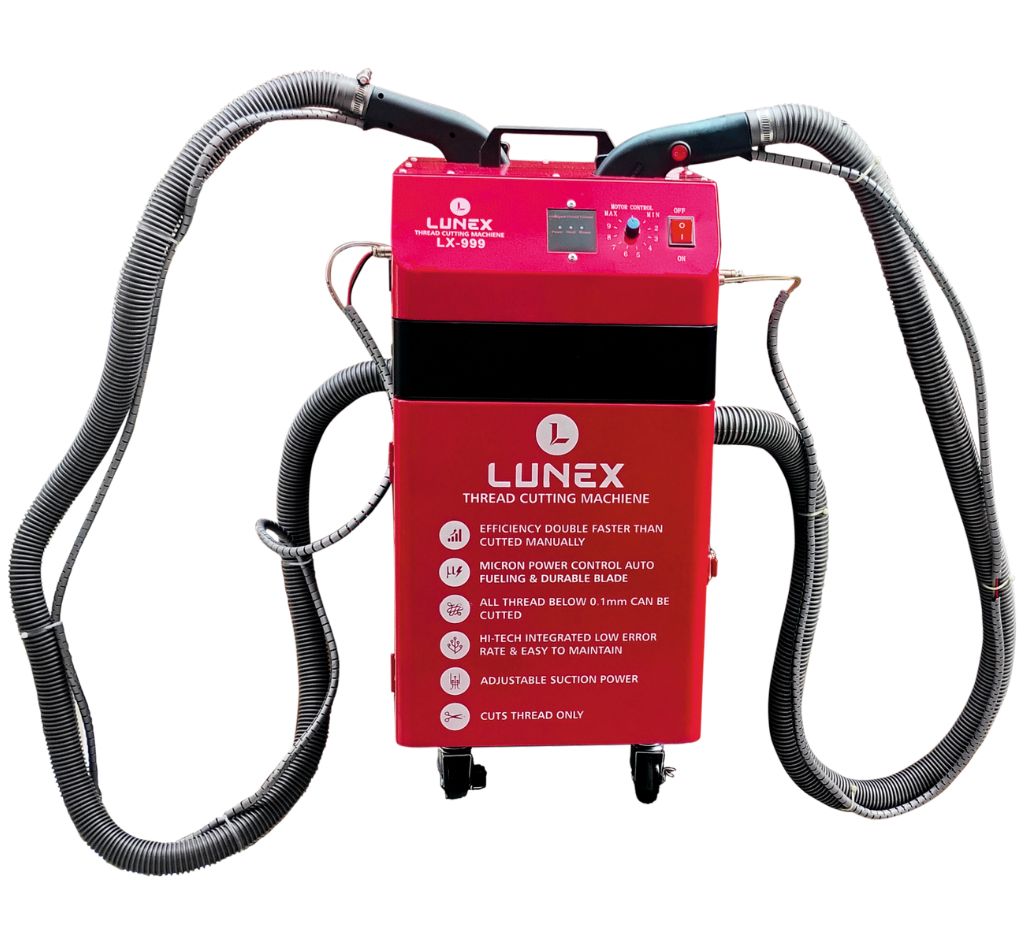
Lunex Machines offers a Thread Trimmer Cutting Machine that manufacturers can evaluate when exploring equipment options for thread trimming and garment finishing.
1. How Manual Thread Trimming Works
Manual thread trimming typically involves an operator using scissors or another suitable cutting tool to remove loose threads after sewing.
This method can be practical for smaller production runs, varied garment styles, or operations where trimming locations change frequently. It also gives the operator direct control over individual threads and delicate garment areas.
However, manual trimming can become time-consuming when many garments require the same repetitive task. Results may also vary between operators, particularly when production targets are demanding.
2. How Automatic Thread Trimming Can Help
Automatic or machine-assisted thread trimming may reduce repetitive manual effort when the equipment is appropriate for the intended operation.
Potential benefits can include more consistent processing, reduced dependence on repeated manual cutting, and a finishing workflow better suited to higher-volume requirements. Actual results depend on the machine's design, the garment application, operator practices, and production setup.
Before choosing an automatic solution, manufacturers should clarify whether they need thread trimming after a particular sewing operation, trimming at a dedicated finishing station, or another type of cutting application.
3. Compare Labour and Production Requirements
Manual trimming requires operator time for each garment or component. When production increases, the factory may need to allocate additional workers or adjust the finishing workflow to keep pace.
A suitable automatic solution may help address repetitive tasks, but manufacturers should evaluate the complete process, including loading, positioning, operation, and any manual finishing that remains necessary.
The comparison should be based on measured production data rather than assumptions about speed.
4. Consider the Quality of the Finished Garment
Both manual and automatic methods must meet the factory's finishing standards. Loose threads should be removed without damaging the fabric, cutting into seams, or leaving an untidy appearance.
Before adopting a new method, manufacturers should test representative garments and evaluate:
- Consistency of thread removal
- Risk of accidental fabric damage
- Appearance around seams and edges
- Suitability for different garment constructions
- Operator ease and repeatability
- Need for additional inspection or rework
A faster process is only useful if it maintains the required finishing quality.
5. Evaluate the Cost Beyond the Purchase Price
Manual trimming involves tools, labour, training, and supervision. An automatic machine may involve an initial equipment investment, maintenance, operator training, and other operating expenses.
Manufacturers should compare the cost per finished garment over a realistic production period. This assessment should include labour time, machine utilisation, maintenance, downtime, and the cost of defects or rework.
If thread trimming is a frequent bottleneck, equipment investment may be worth evaluating. For small or highly variable batches, manual trimming may remain a practical choice.
6. Check Compatibility With Your Production Workflow
Before selecting a thread trimming machine, determine where it will fit within the production line and which products it will handle.
Important questions include:
- What types of garments or components will be processed?
- How many pieces need trimming per shift?
- Which threads or trimming tasks must be handled?
- How much floor space is available?
- What training and maintenance will be required?
- Can the operation integrate smoothly with existing finishing stations?
Clear answers help manufacturers avoid purchasing equipment that does not match their actual needs.
7. Explore Thread Trimming Equipment From Lunex Machines
For manufacturers reviewing alternatives to repetitive manual trimming, Lunex Machines' Thread Trimmer Cutting Machine is a relevant product page to explore.
The machine should be evaluated against the intended cutting task, supported garment applications, operating requirements, and expected production volume. Confirm the available specifications with Lunex Machines before deciding whether it is suitable for the factory's workflow.
Manual vs Automatic Thread Trimming: Making the Decision
Manual trimming may be suitable for small batches, changing product styles, or detailed work that requires individual operator control. Automatic or machine-assisted trimming is worth evaluating when the task is repetitive, production volumes are high, and the equipment is compatible with the garments being processed.
Neither method is automatically the best choice for every factory. A practical decision should be based on output requirements, finishing quality, total operating cost, and the amount of manual work that can realistically be reduced.
Conclusion
Thread trimming contributes to the final appearance and quality of a garment. By comparing manual and automatic methods against production volume, labour requirements, fabric safety, and operating costs, manufacturers can select an approach that fits their finishing process. Lunex Machines' Thread Trimmer Cutting Machine is one option to assess when exploring equipment for more efficient garment finishing.