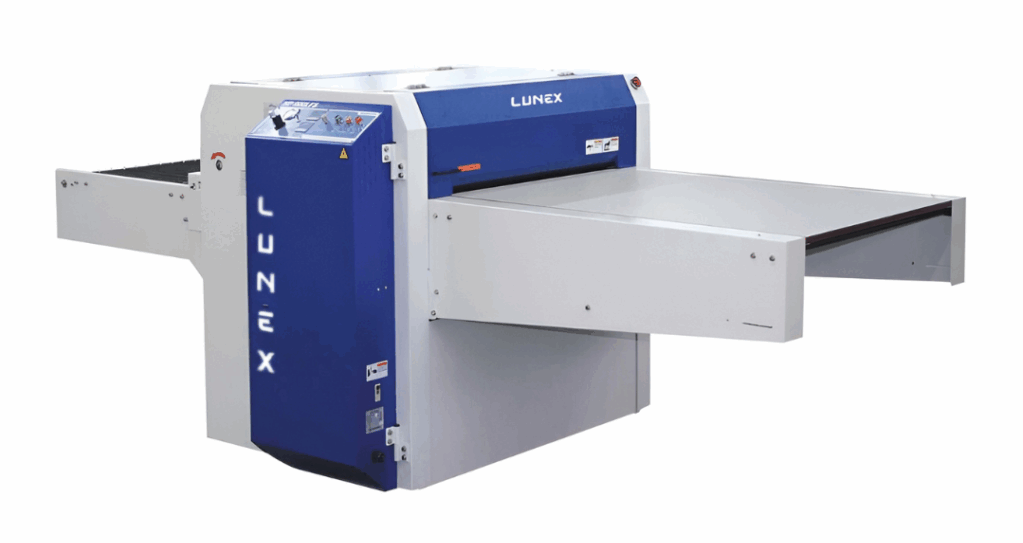
Fusing is an important garment manufacturing operation in which an interlining is bonded to a face fabric using a combination of heat, pressure, and time. The quality of the bond affects how collars, cuffs, waistbands, plackets, and other garment components retain their intended shape.
An Advanced Fusing Machine can support a controlled production process, but equipment alone does not guarantee a good result. Manufacturers must select suitable materials and establish processing conditions that work for the specific fabric and interlining combination.
Why Fusing Conditions Need Careful Control
Fusing performance depends on the interaction between the face fabric, interlining adhesive, and processing conditions. If the combination is unsuitable, the finished component may develop weak adhesion, bubbling, wrinkles, or an undesirable change in surface appearance.
Three processing variables deserve particular attention: temperature, pressure, and dwell time.
Temperature
Temperature affects adhesive activation. If the temperature is too low for the selected material system, the adhesive may not bond adequately. Excessive heat can damage sensitive fabrics, alter their appearance, or cause other processing defects.
The appropriate setting depends on the adhesive specification, fabric characteristics, machine design, and manufacturer's recommendations. A single temperature should not be assumed suitable for every garment material.
Pressure
Pressure helps bring the fabric and interlining into contact during bonding. Insufficient or uneven pressure can contribute to inconsistent adhesion, while unsuitable pressure may affect fabric texture or the finished component.
Manufacturers should check the machine's pressure consistency and follow the recommended processing conditions for the selected materials.
Dwell Time
Dwell time determines how long the material remains under the required processing conditions. If exposure is insufficient, the adhesive may not develop the intended bond. Excessive exposure can affect heat-sensitive materials or reduce production throughput unnecessarily.
Temperature, pressure, and dwell time should be evaluated together rather than adjusted independently without testing.
Match the Interlining to the Face Fabric
A fusing problem may originate in material selection rather than the machine. Interlinings differ in adhesive properties, weight, construction, and suitability for particular fabrics.
A combination that works well for a structured collar may not provide the desired hand feel or appearance for a lightweight garment panel. Manufacturers should test the actual fabric and interlining combination before starting bulk production.
Evaluation should include adhesion, appearance, flexibility, dimensional stability, and the behavior of the fused component after the relevant care or testing procedures.
Use Trial Runs to Identify Defects Early
Before processing a full production batch, manufacturers should conduct controlled trials using representative materials.
A practical trial process includes:
- Confirm the face fabric and interlining specifications.
- Set processing conditions according to the material suppliers' recommendations.
- Fuse representative samples.
- Examine the samples for bubbles, wrinkles, visible adhesive, distortion, and uneven bonding.
- Perform the required adhesion or durability tests.
- Record the approved settings and repeat the checks when materials or conditions change.
This process reduces the risk of discovering widespread fusing defects after garments have progressed to later production stages.
Monitor Consistency During Production
Even approved settings can produce inconsistent results if the equipment is poorly maintained or the material supply changes. Manufacturers should monitor temperature control, pressure uniformity, belt condition where applicable, and the consistency of incoming materials.
Operators should also know how to identify early signs of poor bonding and when to stop production for investigation.
Tracking defects by material type, production batch, and machine setting can help supervisors identify recurring causes instead of repeatedly correcting the same symptoms.
Selecting an Advanced Fusing Machine for Your Factory
When evaluating an Advanced Fusing Machine, manufacturers should consider the materials processed, component sizes, production volume, required temperature and pressure controls, and the ease of maintaining consistent operating conditions.
Lunex Machine is an option for garment manufacturers exploring fusing equipment for their production requirements. Before making a purchase, discuss the intended applications and verify that the available machine specifications match the factory's materials and process requirements.
Reliable fusing depends on the relationship between equipment, interlining selection, and process control. By validating this combination before bulk production, manufacturers can work toward consistent bonding and a more dependable garment finish.