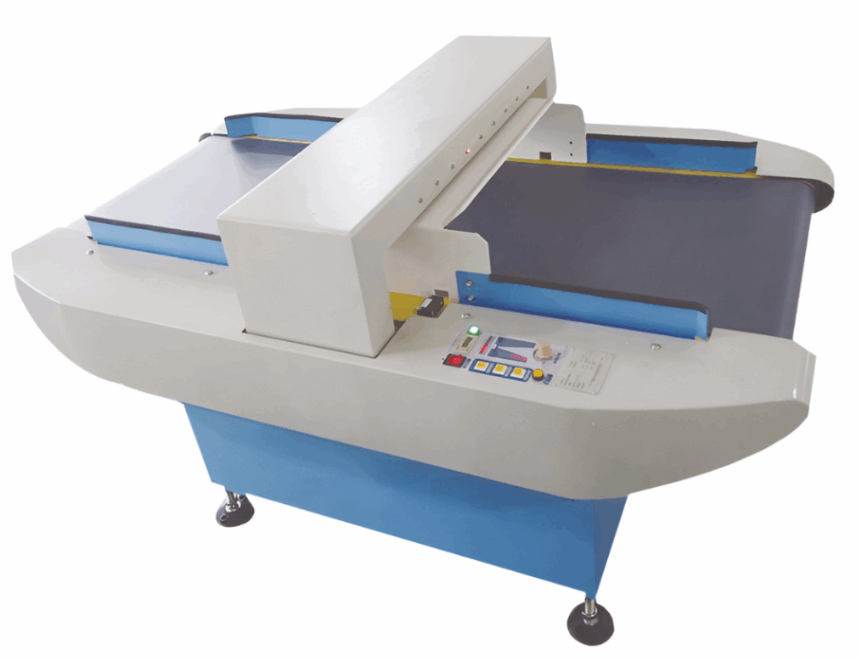
In the competitive apparel and home textile export market, product quality is evaluated not only by design and stitching precision, but also by strict safety standards. Among all quality control hazards on a busy factory floor, broken metal sewing needles present one of the highest operational risks. A single missing fragment can lead to severe consumer injury, costly product recalls, canceled orders, or permanent damage to a brand's reputation. To prevent these risks, apparel manufacturers rely on advanced automated detection systems. Installing a high-sensitivity Needle Detector Machine has become an essential safeguard for modern garment production lines.
The Hidden Risk in High-Speed Textile Production
During high-speed sewing, quilting, or embroidering, machine needles undergo immense strain and occasionally snap. While operators replace broken needles, retrieving every sharp micro-fragment from dense fabrics, padding, or multi-layered home furnishings manually is almost impossible.
Global retailers, international buyers, and safety regulatory boards enforce zero-tolerance policies regarding metal contaminants in shipped goods—especially in baby wear, children's apparel, and home bedding. To pass mandatory quality audits and secure international export compliance, manufacturers must route 100% of finished goods through automated electromagnetic scanning systems.
Precision Detection with Lunex Machine Technology
Industrial machinery leaders like Lunex Machine provide state-of-the-art metal inspection systems engineered to identify even the smallest metal particles embedded within finished textiles. Utilizing high-accuracy magnetic induction sensors, these systems scan items down to sub-millimeter metal fragments before goods are packaged and dispatched.
Key performance features of advanced inspection machinery include: * High-Sensitivity Sensor Arrays: Capable of pinpointing ferrous metal fragments as tiny as 0.8 mm hidden deep within thick, padded fabrics. * Automated Conveyor Workflow: Integrated conveyor systems seamlessly process high volumes of garments without slowing down overall production throughput. * Multi-Point Alarm Systems: Immediate visual LED displays and audible buzzer alerts immediately signal operators and halt the belt when contamination is detected. * Adjustable Sensitivity Controls: Customizable settings allow production teams to calibrate detection levels based on specific fabric weights, metallic trims, or buyer standards. * Anti-Interference Technology: Modern digital signal filtering eliminates false alarms caused by ambient factory vibrations or external electrical noise.
Protecting Brand Integrity and Reducing Operational Losses
Beyond meeting mandatory safety compliance, automated metal scanning acts as a crucial financial safeguard for textile enterprises. The cost of retrieving a compromised shipment from overseas far outweighs the investment in reliable quality control machinery.
By catching contaminated pieces early on the factory floor, manufacturers eliminate potential liability claims, avoid expensive product re-examinations, and reinforce their position as trustworthy suppliers to top-tier international brands.
Strengthening Your Quality Assurance Line
As global export standards become increasingly stringent, quality control can no longer rely on visual inspection alone. Integrating precision metal detection into your final inspection and packaging pipeline ensures that every unit leaving your facility is safe, compliant, and ready for retail shelves. Investing in reliable inspection machinery guarantees that your manufacturing operations maintain uncompromised safety standards while protecting your bottom line.